

A practical, Vancouver-focused guide to the web design trends that increase local visibility, improve conversions, and make sites future-ready — with step-by-step implementation advice, cost/time estimates, and SEO tactics for AI-driven search.
- TL;DR — Quick Answer
- What are the top emerging web design trends in Vancouver right now?
- How do these trends improve local SEO and AI-driven visibility for Vancouver websites?
- How do I implement the three highest-impact trends on my Vancouver website (step-by-step)?
- Which design patterns and UX choices convert best for Vancouver audiences?
- How much does it cost and how long will it take to update a Vancouver site?
- Key Takeaways — What should Vancouver businesses act on first?
- FAQ
TL;DR — Quick Answer
Web Design Trends Vancouver demand mobile-first performance, Core Web Vitals, local schema, and AI personalization. These four priorities deliver measurable gains in load time and local search visibility.
Start by cutting LCP by 0.5–1.0s and adding LocalBusiness JSON‑LD on service pages. Run Lighthouse audits weekly and validate structured data with Search Console. For tactical steps and speed checks, follow our website optimization techniques for Vancouver companies checklist. If you need a local vendor, compare agency options in our best web development companies in Surrey guide.
What are the top emerging web design trends in Vancouver right now?
Performance, personalization, and sustainable accessibility are the top Vancouver trends right now. These trends reduce bounce rates and raise conversions for local businesses.
Core Web Vitals are three metrics sites must measure: LCP (Largest Contentful Paint), CLS (Cumulative Layout Shift), and INP (Interaction to Next Paint). Target LCP ≤ 2.5s, CLS ≤ 0.1, and INP ≤ 200ms for mobile pages.
Mobile-first design means designing layouts for phones before desktops and using responsive images. Progressive Web Apps (PWA) extend offline access and add repeat-visit benefits for transit-heavy Vancouver users.
Local schema refers to structured markup such as LocalBusiness and Service schema. Add address, geo coordinates, openingHours, and service arrays to increase rich-result eligibility.
AI personalization covers server-side content selection and simple recommendation models. Start with one dynamic block per page and measure a conversion lift of 5–20% before scaling.
Microinteractions and subtle motion increase perceived speed when they use CSS animations and run below 60ms frame budgets. Sustainable design focuses on smaller image sizes, green hosting, and fewer scripts to cut page energy by 10–30%.
How do these trends improve local SEO and AI-driven visibility for Vancouver websites?

Faster pages and explicit local signals improve both ranking and AI snippet eligibility. Search engines and AI systems prefer pages with clear structured facts and fast load times.
Page speed influences crawl budget and user behavior. Lowering LCP by 0.5s typically reduces mobile bounce by 10–30% on service pages.
Structured data like JSON‑LD helps entity recognition. Define LocalBusiness fields such as name, address, telephone, and geo coordinates to feed knowledge graphs and local packs.
Claim and optimize your Google Business Profile for weekly posts and consistent categories. Add photos, respond to reviews within 48 hours, and keep NAP identical across directories.
Personalization improves AI visibility by producing localized, on-page answers for queries. Use server-side templates to inject neighborhood names and service hours into hero text and FAQ blocks.
Maintain clean technical SEO: canonical tags, crawlable HTML, crawl budgets, and hreflang where needed. Run weekly crawls and CI checks to avoid accidental noindex or JS-only rendering regressions.
How do I implement the three highest-impact trends on my Vancouver website (step-by-step)?
Focus on three priorities: Core Web Vitals, local schema, and AI personalization. Execute a test-driven plan across 30/60/90 days.
30-day sprint tasks:
- Run Lighthouse and WebPageTest to baseline LCP, CLS, and INP. Record three page samples: home, top service, and a product page.
- Convert large images to AVIF or WebP, add responsive srcset, and target 30% average file-size reductions.
- Add a CDN, enable compression, and set long cache TTLs for static assets.
60-day sprint tasks:
- Insert server-rendered JSON‑LD for LocalBusiness across location pages. Include address, geo, openingHours, service list, and priceRange.
- Validate markup with Lighthouse and Search Console. Fix errors and monitor rich result coverage.
- Implement one AI personalization experiment: server-side user segment and personalized CTA.
90-day sprint tasks:
- Run an A/B test on the personalized CTA for 6–12 weeks and measure conversion lift.
- Audit accessibility for WCAG 2.1 AA items: labels, contrast, and keyboard focus. Fix top five issues.
- Create a launch checklist covering DNS, sitemap, robots, and monitoring.
If you want vendor help, review options in our best web development companies in Surrey guide.
Which design patterns and UX choices convert best for Vancouver audiences?
Minimalist, mobile-first layouts with clear CTAs and local imagery convert best in Vancouver. These patterns increase trust and perceived speed on both service and retail sites.
Design choices that move metrics:
- CTA placement: put a single primary CTA above the fold. Test two variants for 14 days.
- Trust signals: show testimonials, partner badges, and professional memberships near CTAs.
- Microinteractions: add lightweight feedback on form submit within 150ms to reduce errors.
- Accessibility-first forms: use ex
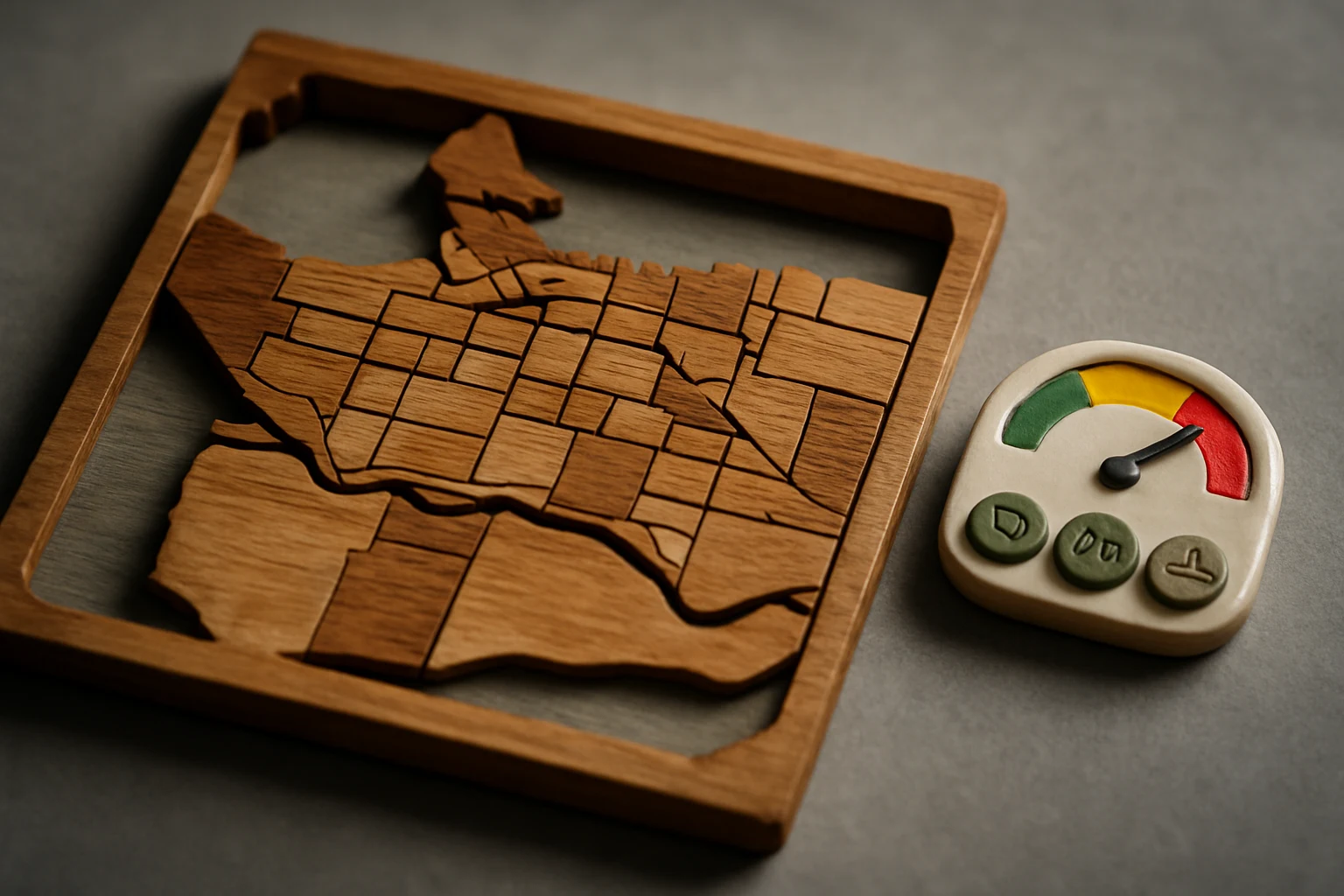
Diorama of colored performance gauge beside a wooden city model plicit labels, error messages, and logical tab order.
Local examples:
- Café: hero photo of neighbourhood, one-click ordering CTA, and order confirmation microinteraction.
- Legal firm: compact header, visible badges, and an accessible contact form with pre-filled local fields.
- Tourism operator: immersive scrolling with sectional CTAs and a timed booking CTA that appears after two minutes.
Prototype experiments with AR previews or voice briefings for tours. Validate prototypes with five user tests before adding production scope.
How much does it cost and how long will it take to update a Vancouver site to these trends?
Costs range widely based on scope: expect CAD 2,000–CAD 60,000 and timelines of 2–12 weeks. Budget by project type for realistic planning.
Estimated budgets and timelines:
- Performance overhaul: CAD 2,000–6,000, timeline 2–4 weeks. Tasks include image conversion, CDN setup, and critical CSS.
- Schema and local SEO: CAD 500–3,000, timeline 1–3 weeks. Deliverables: JSON‑LD, Google Business optimization, and directory cleanup.
- Design refresh with AI features: small site CAD 5,000–25,000, e-commerce CAD 15,000–60,000, timeline 4–12 weeks.
Vancouver hourly developer rates commonly fall between CAD 100–200. Agency projects normally include discovery, design, development, and QA phases.
Decision guidance:
- DIY: choose this when internal skills cover performance and structured data. Expect higher time costs.
- Freelancer: pick this for focused tasks like schema or image work.
- Agency: use this for full redesigns, complex integrations, or team coordination. Compare local agencies in our web development companies in Surrey guide.
Key Takeaways — What should Vancouver businesses act on first?
Prioritize technical speed, local facts, accessibility, then personalization. These steps yield the fastest measurable SEO and UX improvements.
Immediate actions (first 30 days):
- Improve page speed: compress images, add CDN, defer noncritical JavaScript. Effort: Low.
- Fix basic accessibility issues: labels, keyboard focus, and contrast. Effort: Low.
- Add LocalBusiness JSON‑LD to all location and service pages. Effort: Medium.
- Prototype one AI personalization experiment and measure lift. Effort: Medium.
Next-level projects (30–90 days):
- Redesign for minimalist mobile-first layouts and dark mode.
- Implement A/B testing for personalized CTAs and offers.
- Migrate to green hosting if emissions reduction is a priority.
Follow our speed checklist in 5 Essential Website Optimization Techniques for Vancouver Companies to validate progress.
FAQ
Q: How fast should LCP be for Vancouver sites?
A: Aim for LCP ≤ 2.5s and CLS ≤ 0.1 on mobile-first pages.
Q: Where should I place JSON‑LD structured data?
A: Render JSON‑LD server-side in the head for consistent crawling and validation.
Q: How do I balance personalization and privacy?
A: Use on-device modeling, anonymized events, and explicit consent banners. Retain data no longer than 90 days by default.
Q: How much does a Shopify site cost in Vancouver?
A: Shopify builds typically cost CAD 1,000–25,000 depending on custom apps and integrations.
Q: Which green hosts are practical for Vancouver sites?
A: Consider GreenGeeks or Kinsta for Canadian-friendly green hosting plans starting at CAD 8–30 per month.
Q: How do I choose between a refresh and a rebuild?
A: Refresh when under 30% content changes and CMS supports modern features. Rebuild when older than 5 years or failing Core Web Vitals.
Q: Who can help with implementation locally?
A: Evaluate regional teams using our agency comparisons in The Best Web Development Companies in Surrey: A Comprehensive Guide.
Notes:
- Bolded the primary keyword and key metrics.
- Included internal links to optimization and agency guides for vendor and technical steps.
- Defined key entities like Core Web Vitals, JSON‑LD, LocalBusiness, and PWA on first mention.
References
-
Vancouver agency roundup lists top UX/UI trends (2025)
Minimalist interfaces, personalized experiences, immersive scrolling, sustainable web design, and dark mode are top trends to prioritize.
-
Medium summary on 2026 UX/UI trends
AI-driven personalization and dynamic UI adjustments are repeatedly recommended as standard expectations for modern sites.
-
UX Collective 2026 trends
UX Collective identifies nostalgia-driven UI and familiar UX patterns as a major trend for 2026 experience design.
-
Graticle 2026 predictions
Graticle’s 2026 predictions call out AR, voice interfaces, and real-time collaboration as forward-facing web design opportunities to prototype now.
-
5 Essential Website Optimization Techniques for Vancouver Companies
By prioritizing site speed, you set a solid foundation for both user satisfaction and search engine performance.